
Executive Condominiums in Singapore: A Practical Guide for Homebuyers
By Audrie Poh · CEA R060879G · · Updated · 3 min read
If you've been house-hunting in Singapore, chances are you've come across the term Executive Condominium, or EC for short. They look like private condos, come with facilities like pools, gyms, and BBQ pits — but they're priced more affordably.
So, what’s the catch? And why do many HDB upgraders look at ECs as a step between HDB and private property?
Let’s break it down, and look at how ECs fit with our W.A.T.E.R. concept (Wealth Accumulation Towards Early Retirement).
What Is an Executive Condominium (EC)?
ECs are a hybrid form of housing introduced by the Singapore government — designed to bridge the gap between HDB flats and private condominiums.
- Developed and sold by private developers
- Subsidised and regulated by the government
- Open only to Singaporean buyers who meet certain income ceilings
Eligibility to Buy an Executive Condominium
- Citizenship: At least 1 applicant must be a Singapore Citizen.
- Age: At least 21 years old (35 under the Joint Singles Scheme).
- Income Ceiling: Household income must not exceed $16,000/month for ECs on sale now (as at October 2026). For new ECs on land with tenders closing on or after 24 August 2026, the ceiling is $18,000.
- Ownership: Cannot own private property or have disposed of one in the last 30 months.
- Scheme: Apply under Public, Fiancé/Fiancée, Orphans, or Joint Singles Scheme.
Why Are ECs So Popular?
- Lower Entry Price: 20–30% cheaper than private condos.
- CPF Housing Grants: Up to $30,000 for eligible first-timers.
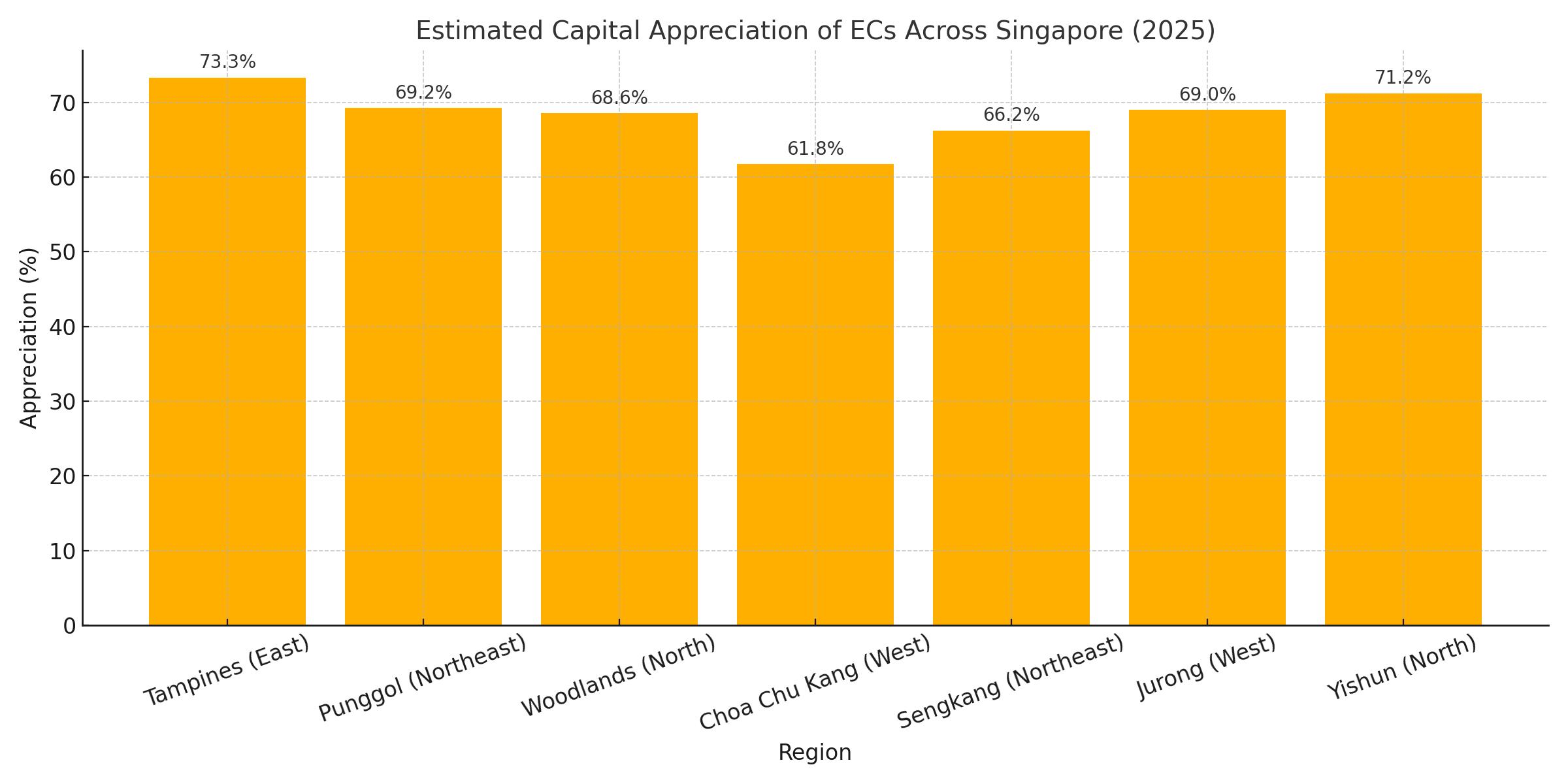
- Capital Appreciation: Some ECs have risen in value after reaching MOP and full privatisation, but gains depend on the project, price and timing.
- Lifestyle & Facilities: Comparable to full-fledged private condos.
ECs Through the W.A.T.E.R Lens
- W – Wealth Preservation: ECs are priced below comparable private condos, which can give some buffer.
- A – Appreciation Potential: Percentage gains depend on entry price, location and timing, and results vary by project.
- T – Timing: ECs are launch-sensitive. Good timing can mean better returns.
- E – Exit Strategy: Sell after MOP or retain as rental asset post-privatisation.
- R – Retirement Planning: An EC can be part of a retirement plan, through rental income or by right-sizing later.
Should You Buy an EC in 2026?
EC rules changed in 2026. For EC land with tenders closing on or after 8 May 2026, MND announced that:
- The Deferred Payment Scheme (DPS) is removed
- The minimum occupation period (MOP) becomes 10 years, up from 5
- 90% of units are set aside for first-timers and 10% for second-timers
Sites whose tenders closed before then keep the old rules. As at October 2026, the last EC sites with the DPS and a 5-year MOP are Senja Close, Woodlands Drive 17 (CDL), Woodlands Drive 17 (Sim Lian), Sembawang Road and Miltonia Close. Solano Grand, at Senja Close, is one of them.
In practice, at one of these last launches you can sell after 5 years from TOP. At later ECs, you will wait 10 years, with no deferred payment option..
If you are comparing Wynwood Grand, at Woodlands Drive 17, or another of these launches with a later EC, work out your eligibility and cash flow first, and check the latest rules with HDB before you decide.
Final Thoughts: ECs as a Step Between HDB and Private Property
Many couples we work with started their property journey with an EC and, years later, put the sale proceeds towards their next home. Every case is different, and gains are never certain.