How to Start Your Real Estate Investment Portfolio in Singapore
By David Ho · CEA R027577A · · Updated · 7 min read
For many people, local and foreign, having a real estate investment portfolio in Singapore is one of the most effective ways to create long-term wealth, generate passive income, and secure their financial future.
However, successful property investment requires more than simply buying a condo or HDB flat and waiting for prices to rise. As highlighted in our Real Estate Portfolio Planning approach, the ultimate goal of real estate investment is to create a deliberate, structured strategy that transforms property ownership into a wealth-building engine.
Understanding Your Starting Point

The first step toward building a real estate investment portfolio is understanding your current financial and property position. You’ll need a clear picture of your cash flow, outstanding loans, and how your assets are performing.
We can’t emphasize enough the importance of evaluating existing property holdings, current debt levels, and available capital before making any new investment decisions. In Singapore, this also means assessing your Total Debt Servicing Ratio (TDSR), loan eligibility, and CPF usage. Knowing exactly where you stand helps you determine how much you can invest and pinpoint what level of risk you can comfortably manage.
Unlocking Equity and Spotting Opportunities
Once your financial situation is clear, the next step is identifying opportunities within your existing portfolio. From our experience, many property owners have untapped equity in underperforming assets that could be restructured or upgraded for better returns. This might involve refinancing your mortgage to free up cash flow or replacing a low-yield property with one that aligns better with your investment goals.
In Singapore’s market, where rental yields tend to hover around 3%, strategic repositioning can make a significant difference. The key is to focus on properties that combine steady rental demand with strong capital appreciation potential for when you eventually cash out.
Setting a Long-Term Roadmap
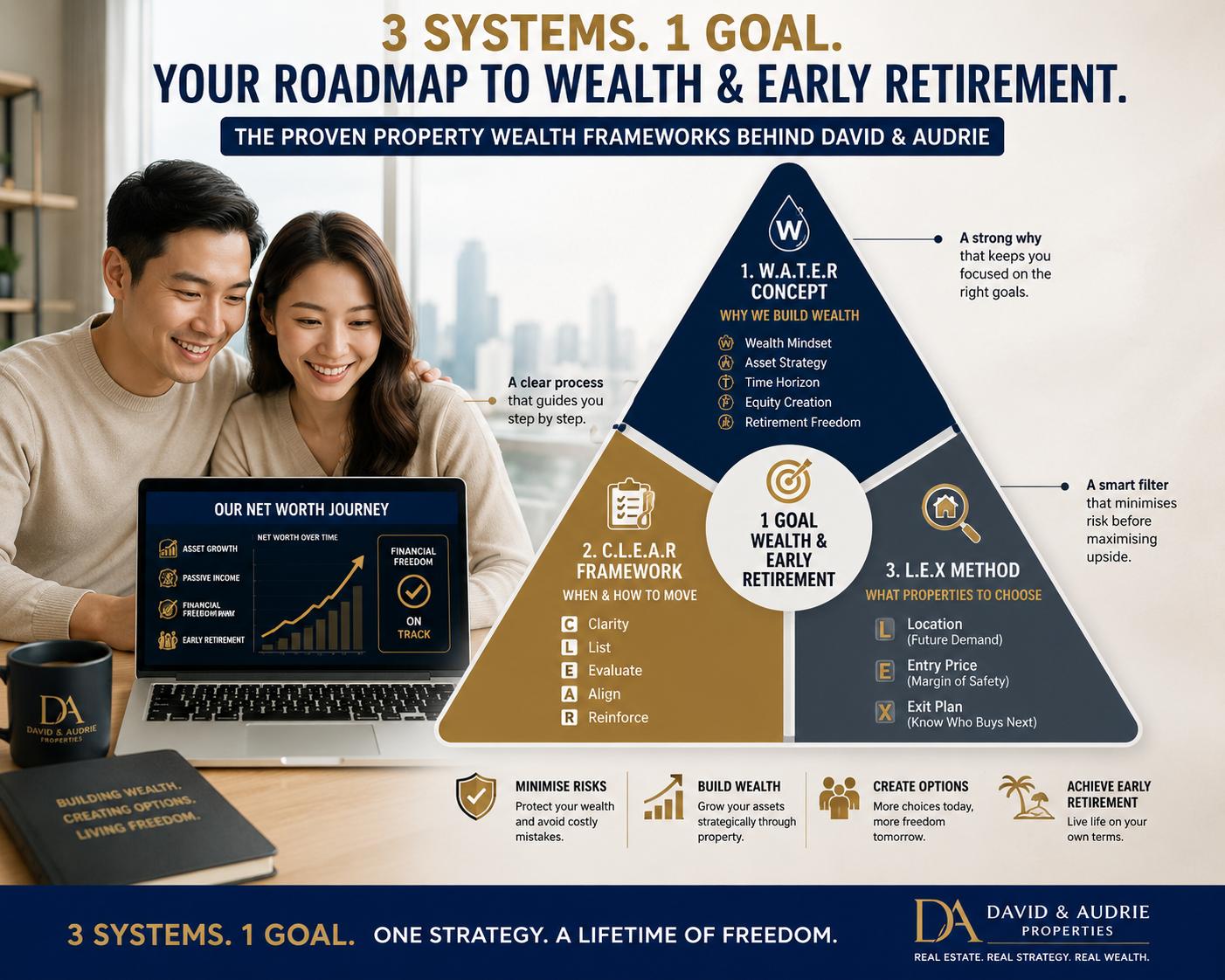
Every serious real estate investment plan should include a clear roadmap that outlines your goals, time horizon, and exit strategy. David & Audrie’s W.A.T.E.R. concept, short for Wealth Accumulation Towards Early Retirement, embodies this principle by aligning property investments with life stages and future aspirations.
Before diving into your first purchase, think about what you want your portfolio to achieve. Are you focused on building rental income for early retirement, or do you aim to grow your capital for future upgrades or legacy planning? In a tightly regulated market like Singapore, having a long-term view helps you navigate cooling measures, stamp duties, and cyclical price movements with greater confidence.
Running the Numbers

All successful real estate investment is a mixture of many factors, but the core of success is rooted in financial discipline. This means calculating your potential rental yield, cash flow, and long-term profitability before committing to a purchase. In Singapore, where average gross rental yields range between 3.2% and 3.4%, net yields can drop to around 2.5% after accounting for maintenance fees, property taxes, and agent commissions.
When financing costs are considered, especially with recent mortgage rates rising to around 3%, it becomes clear that positive cash flow is not always guaranteed. To stay ahead, you must ensure that your expected returns exceed your financing costs or that your property’s long-term appreciation potential compensates for the short-term shortfall.
Choosing the Right Property
Not all properties will perform equally in Singapore’s diverse market, so your investment strategy should also determine the type of property you choose. For example, HDB flats may offer affordability and stable demand, but restrictions can limit investment flexibility, whereas Executive Condominiums (ECs) are often attractive for their potential value uplift after the Minimum Occupation Period (MOP).
Private condominiums, meanwhile, remain the most popular choice for investors due to their strong rental demand and resale liquidity. Lastly, landed properties, though limited in supply and high in cost, appeal to investors seeking long-term capital growth rather than immediate rental yield.
Location will also play a critical role in property performance. Properties near MRT stations, business hubs, and reputable schools consistently attract tenants and maintain steady rental yields, while emerging areas in the city fringe often offer better value and higher yield potential than prime central districts, where entry prices are high and returns can be compressed.
Financing and Risk Management

Your financing structure may determine how resilient your real estate investment portfolio is in the face of market changes. One method many people use to amplify returns is leverage through loans, but this increases risk, especially when interest rates rise. In Singapore, LTV (Loan-to-Value) and TDSR regulations are designed to prevent over-leveraging and protect borrowers, so investors need to plan their purchases carefully.
Beyond financing, investors should also budget for ownership costs such as property tax, maintenance, and potential vacancy periods; these ongoing expenses are usually overlooked but can significantly reduce net yield if not properly managed.
Diversification is another essential principle of portfolio management. Rather than placing all your resources into a single high-value property, consider spreading your investments across different property types or locations. A true portfolio is not a random collection of properties; it’s a coordinated strategy designed to balance risk, return, and long-term goals.
Implementation and Ongoing Management
Once your investment plan is in place, the next step is execution. Before purchasing any property, review the building’s management, past rental performance, and upcoming developments in the area. Take your time, conduct thorough due diligence, and don't be pressured by the hype or other people.
After purchasing, ongoing management of your property is a must: monitor rental income, maintain good tenant relationships, and regularly review your mortgage structure. Contrary to popular belief, property investment is not a “set and forget” endeavor. It requires constant monitoring of market conditions, interest rates, and evolving tenant demands, and investors who adapt quickly often outperform those who don’t.
Exit and Legacy Planning

The final stage of a successful real estate investment journey is planning for the exit and legacy of your investments. Whether you are aiming to sell properties to fund an early retirement or to leave them as a legacy for the next generation, a clear exit plan helps your wealth continue to work for you, rather than letting your assets become a liability.
Singapore’s stable property market rewards patience and well-timed exits, which can unlock substantial gains. Investors should view their portfolios as long-term engines of wealth, supporting early retirement and generational transfer.
Frequently asked questions
How much cash do I need to start investing in real estate in Singapore?
Budget for Buyer's Stamp Duty of up to 6% of the price, plus your downpayment and legal fees. A Singapore Citizen buying a second residential property also pays 20% Additional Buyer's Stamp Duty, and 30% on a third, as at October 2026, so run these costs before you commit to a purchase.
What is a realistic rental yield to expect in Singapore?
Gross rental yields for private condos have averaged around 3.2% to 3.4% as at October 2026, falling to roughly 2.5% net after maintenance, property tax and agent fees. Yields tend to run higher in the city fringe and suburbs than in the prime core, so check comparable rentals for the specific property before you buy.
Should I start with an HDB flat, an EC or a condo?
Each has trade-offs: an HDB flat is the most affordable but comes with MOP and resale restrictions, an executive condominium can offer value uplift once it privatises, and a private condo gives the widest rental pool and resale liquidity. The right starting point depends on your TDSR, your goals and your exit plan, which is where C.L.E.A.R begins.
Conclusion
Starting a real estate investment portfolio in Singapore comes down to patience, financial discipline, and strategic foresight. Even though the market can offer stability and long-term potential, yields may only be moderate and costs high, sometimes to the point where an investment makes a loss, so success depends on intelligent planning and execution of your investment portfolio.
By assessing your financial position properly before you even start, you equip yourself with the information and mindset to set a clear roadmap, make data-driven decisions, and build a property portfolio that can grow steadily in value and support your life goals.
With guidance from professional advisors and by staying informed about market trends, regulations, and financing options, you can transform your property investments from a simple way to earn more money into a sustainable wealth-building strategy, one that stands the test of time even in Singapore’s dynamic real estate landscape.
Take the First Step Today

If you’re ready to begin your real estate investment journey but aren’t sure where to start, let the experts here at David & Audrie Properties guide you through every stage of your real estate investment portfolio planning..
Our approach helps property owners unlock hidden potential, optimise their assets, and build a roadmap toward financial independence and early retirement. Don’t leave your property decisions to chance: schedule a personalized portfolio consultation today and discover how strategic real estate planning can turn your property dreams into a lasting legacy.
With over 10 years of experience, David & Audrie can be a trusted real estate partner for you. With our W.A.T.E.R concept, we can not only help you develop a step-by-step retirement plan through real estate investment, but also help you buy and sell real estate in Singapore.
Don't hesitate to contact us through our website by clicking here: David & Audrie or just give us a call by clicking here for all your property needs!